Key Takeaways
At 2 to 3 weeks, bottle-fed babies typically take about 60–90 ml (2–3 oz) per feeding; breastfed newborns take smaller amounts more often.
Expect 8 to 12 feedings every 24 hours, totaling roughly 450–750 ml (15–25 oz) per day.
Hunger cues like rooting, hand-to-mouth movements, and lip-licking signal readiness to eat before crying starts.
After the first 4 to 5 days, at least 5 to 6 wet diapers daily is an easy sign your baby is eating enough.
Cluster feeding around weeks 2 to 3 is common and typically passes within a few days.
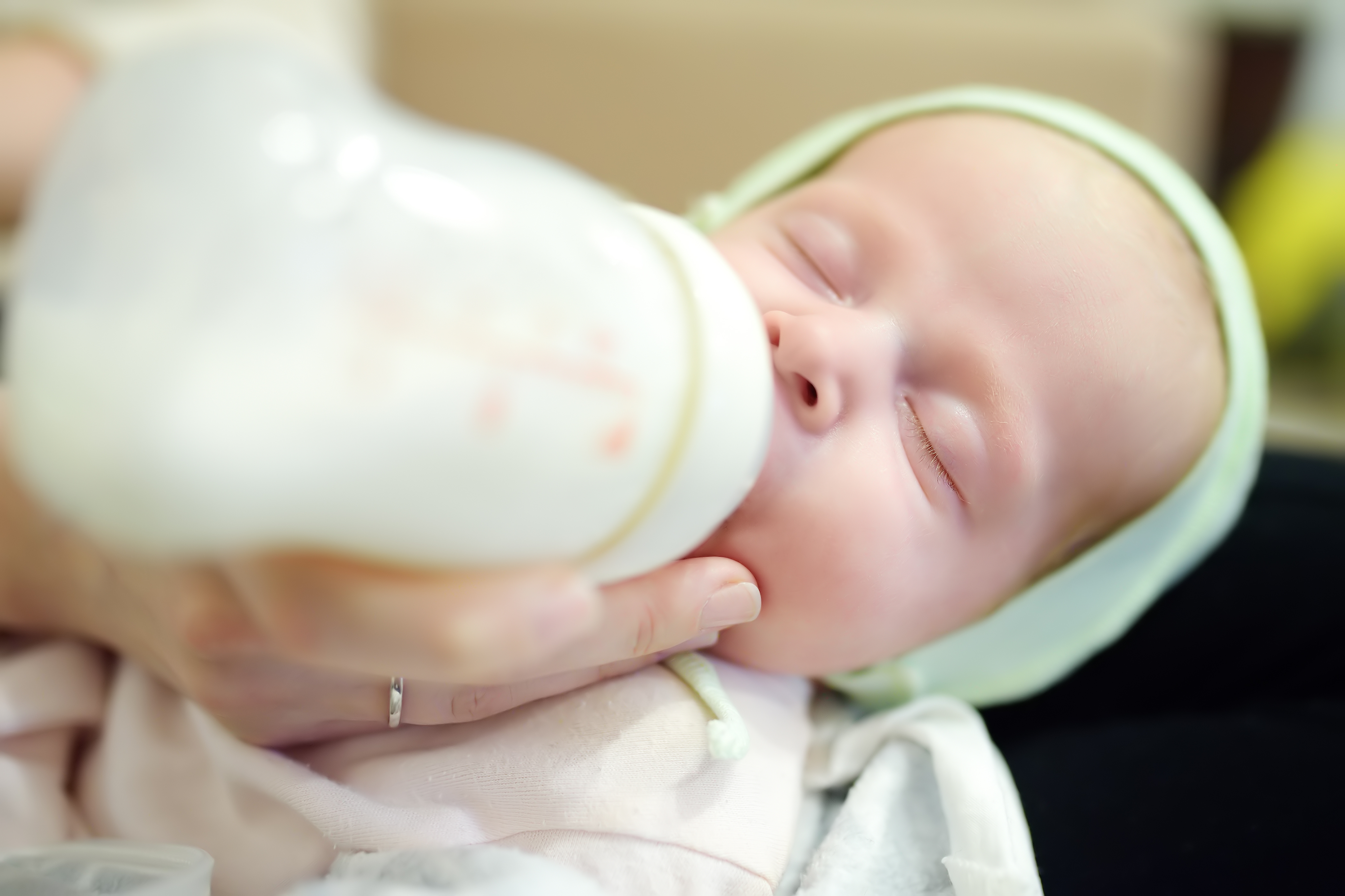
How much should a 3-week-old eat? Most 2- to 3-week-olds need 8 to 12 feedings every 24 hours, with per-feeding amounts that depend on whether they nurse or take a bottle. These volumes grow week by week as your baby's stomach expands from its tiny first-day size.
If you are up at 2 AM squinting at ounce markings or timing a nursing session, you are navigating one of the most common newborn questions. This guide covers how many ounces your 2- to 3-week-old needs, daily intake totals, hunger and fullness cues, and what cluster feeding looks like at this age.

How much should a 2- to 3-week-old eat per feeding?
A 2- to 3-week-old generally takes between 1 and 3 ounces per feeding, with the exact amount depending on feeding method and appetite. After the first day or two, bottle-fed newborns drink about 30–60 ml (1–2 oz) per feeding, climbing to 90–120 ml (3–4 oz) by month's end, according to the American Academy of Pediatrics (AAP).
Your baby is somewhere in that climb right now. A baby who takes 2 oz at one bottle and 3 oz at the next is varying normally; the 24-hour total matters more than any single feeding.
Breastfed babies: session length and estimated volume
Breastfed newborns typically take about 30 ml (1 oz) per feeding in the first few weeks, gradually increasing, as the AAP notes. By now your milk has transitioned from colostrum into mature breast milk. Breastfed babies tend to take smaller, more frequent feedings than formula-fed infants, the AAP explains, so diaper count and weight gain are your best daily gauges.

Formula-fed babies: ounces per bottle
The Centers for Disease Control and Prevention (CDC) recommends offering formula-fed newborns 30–60 ml (1–2 oz) every 2 to 3 hours, adding more when hunger cues appear. The table below shows how newborn feeding amounts by age change from the first week through month one.
| Age | Stomach size (approx.) | Per feeding | Feedings / 24 h | Approx. daily total |
|---|---|---|---|---|
| Days 1–2 | ~5–7 ml | ~15 ml (0.5 oz) | 8–12 | ~120–180 ml (4–6 oz) |
| Days 3–7 | ~30–60 ml | 30–60 ml (1–2 oz) | 8–12 | ~350–500 ml (12–17 oz) |
| Weeks 2–3 | ~60–80 ml | 60–90 ml (2–3 oz) | 8–12 | ~450–750 ml (15–25 oz) |
| Week 4 | ~80–150 ml | 90–120 ml (3–4 oz) | 8–10 | ~700–960 ml (24–32 oz) |
Your baby may sit at either end of these ranges depending on size and appetite.
How often should you feed a 2- to 3-week-old?
Your 2- to 3-week-old will likely eat 8 to 12 times every 24 hours, roughly every 2 to 3 hours around the clock. Some sessions will cluster closer together, especially in the evening.
Feeding on demand vs. timed intervals
Responsive feeding, following your baby's cues rather than a timer, is the approach most experts support. The CDC notes that breastfed babies feed on average every 2 to 4 hours in the first weeks, with cluster bursts as often as every hour. Formula-fed babies tend to settle into a rhythm of about every 3 to 4 hours, according to the AAP. The World Health Organization (WHO) recommends exclusive breastfeeding for the first 6 months.
Breastfed: roughly every 2–4 hours, about 10–12 sessions daily
Formula-fed: roughly every 3–4 hours, about 8–10 sessions daily

Night feeds and when to wake a sleepy newborn
You may need to wake your newborn for feedings during these early weeks. The AAP advises waking a formula-fed baby who sleeps longer than 4 to 5 hours in the first few weeks. The CDC similarly notes breastfed babies may need waking every 2 to 4 hours at first. Once your pediatrician confirms steady weight gain, longer stretches may become acceptable.
How do you know your 2- to 3-week-old is eating enough?
Diaper output and consistent weight gain are the two most reliable signs that your 2- to 3-week-old is eating enough. Along with feeding, your 2-week-old is reaching several other developmental milestones.
Diaper output and weight gain milestones
After the first 4 to 5 days, your baby should produce at least 5 to 6 wet diapers per day, according to the AAP. For breastfed babies, stools should be yellow and loose with small curds by day 5 to 7, with at least 3 to 4 per day, as the AAP describes. If your baby is producing only three wet diapers in a day instead of the expected six or more, contact your pediatrician the same day.
Between checkups, you can log your baby's weight in Yuppo and follow the percentile curve to see how each week's feedings translate into growth.
5–6+ wet diapers daily after the first few days
3–4 yellow stools daily for breastfed babies in the first month
Steady weight gain confirmed at well-baby visits

Hunger and fullness cues to watch
Your baby communicates hunger and fullness through body signals before crying. The CDC lists hunger cues from birth to 5 months: putting hands to the mouth, turning toward the breast or bottle (the rooting reflex), lip-licking, and clenched hands. Fullness cues include closing the mouth, turning away, and relaxed hands.
Babies also suck for comfort, the AAP notes, so a cuddle or diaper change is sometimes all your baby needs.
Cluster feeding and the 3-week growth spurt
Cluster feeding is when your baby asks to eat several times in quick succession, usually in the late afternoon or evening. It is common around weeks 2 to 3 and does not mean your milk supply is low.
What cluster feeding looks like
During a cluster-feeding stretch your baby may nurse or take a bottle every 30 to 60 minutes for several hours. The CDC notes that some breastfed babies feed as often as every hour at times. A breastfed baby around week 3 may nurse every 45 minutes for an evening or two and return to wider spacing by morning. For more on this week, see our 3-week-old newborn development guide.
Timing: often late afternoon or evening
Frequency: feedings every 30–60 minutes for 2–4 hours
Duration: typically 1–3 days during a growth spurt
Not a sign of low milk supply

How long a growth spurt typically lasts
Growth spurt appetite bursts around weeks 2 to 3 typically last 2 to 3 days, though some babies stretch close to a week. Your baby may seem hungrier, fussier, and eager to eat around the clock during this window. Frequent nursing helps signal your body to increase milk production. For a broader look at timing, see our baby growth spurts guide.
What does a 2- to 3-week-old feeding schedule look like?
Across 24 hours, a 2- to 3-week-old feeding schedule usually includes 8 to 12 feedings, with your baby's hunger cues guiding the spacing. These samples are starting points, not strict timetables.
Breastfeeding day sample
A breastfed 2- to 3-week-old typically nurses about 10 to 12 times per day, with a possible cluster window in the evening.
7:00 AM Nurse (15–20 min)
9:00 AM Nurse
11:00 AM Nurse
1:00 PM Nurse
3:00 PM Nurse
5:00–7:30 PM Cluster feeds (every 30–60 min)
10:00 PM Nurse
1:00 AM Nurse (wake if needed)
4:00 AM Nurse (wake if needed)
Formula feeding day sample
A formula-fed 2- to 3-week-old generally takes about 8 bottles over 24 hours, each around 2 to 3 ounces, spaced roughly every 3 hours.
7:00 AM Bottle
10:00 AM Bottle
1:00 PM Bottle
4:00 PM Bottle
7:00 PM Bottle
10:00 PM Bottle
1:00 AM Bottle
4:00 AM Bottle
If your baby shows hunger cues sooner, offer a feeding earlier.
A few signs that warrant a same-day call to your pediatrician:
Your baby consistently refuses to eat or nurses for under 5 minutes per session
No weight gain or continued weight loss at a scheduled check
Frequent forceful vomiting (different from occasional small spit-ups)
Summary and Next Steps
Per-feeding amounts rise quickly: your baby's intake at week 3 is already noticeably larger than week 1, heading toward 90–120 ml (3–4 oz) by month's end.
Follow hunger cues over the clock: responsive feeding with 8 to 12 sessions in 24 hours supports healthy growth for both breastfed and formula-fed babies.
Count diapers this week: track wet and soiled diapers as your quickest at-home check that feedings are on target.
Cluster feeding will pass: those marathon evening sessions are temporary and help build milk supply.
Book your next weight check: a visit to your pediatrician in the coming days confirms that growth is tracking well.
This content is for information only; always consult your pediatrician for diagnosis and treatment.
Figuring out whether each feeding is "enough" changes from week to week during the newborn period. In Yuppo, you can enter your baby's birth date and follow week-by-week developmental milestones alongside nutrition suggestions matched to your newborn's age.
Frequently Asked Questions
Breastfed babies self-regulate intake effectively, but bottle-fed newborns can take in more than needed because drinking from a bottle requires less effort, as the AAP notes. Watch for fullness cues like turning away or closing the mouth, and avoid pressuring your baby to finish every bottle.
Yes, in most cases you should wake your newborn if they sleep longer than about 4 to 5 hours without eating in the first few weeks. Once your baby has regained birth weight and your pediatrician confirms steady growth, longer stretches may gradually become acceptable.
Hunger cues include rooting, hand-to-mouth movements, and fussing before crying, while comfort sucking tends to be slower and lighter with relaxed hands. If your baby ate recently and shows only gentle sucking motions, a cuddle or pacifier may be enough.
Healthy newborns typically gain about 20–30 g (0.7–1 oz) per day after regaining birth weight, which most babies reach by roughly 10 to 14 days. Your pediatrician tracks weight at each well-baby visit, and those checks are the most reliable way to confirm growth is on course.
Small spit-ups after a feeding are very common at this age and usually harmless. If your baby gains weight steadily and produces enough wet diapers, occasional spit-up is rarely a concern. Frequent forceful vomiting paired with poor weight gain is different and worth discussing with your pediatrician.