
Key Takeaways
On day 1, your newborn's stomach is tiny, so just a few milliliters of colostrum at each feeding is all your baby needs.
Most newborns eat 8–12 times every 24 hours during the first week, whether breastfed or formula-fed.
By days 5–7, seeing at least 6 wet diapers in 24 hours tells you your baby's intake is on track.
Breast milk generally transitions from colostrum to mature milk around 2–4 days after birth.
Hunger cues like rooting and hand-to-mouth movements are more useful than fixed ounce targets because every baby feeds at a slightly different pace.
How much your newborn should eat shifts from teaspoons to ounces within the first seven days. Whether you are breastfeeding, formula-feeding, or combining both, your baby's stomach and appetite grow in step. If you are up at 2 a.m. wondering whether your baby had enough, you are not alone. Below you will find a day-by-day newborn feeding chart for the first week, how often to feed your newborn, and the cues that tell you everything is going well.

What does newborn feeding look like in the first week
Newborn feeding in the first week revolves around small, frequent meals that grow larger as your baby's stomach expands day by day. The pace may feel relentless, but it fits a body still adjusting to life outside the womb.
Why feeds are small and frequent
Frequent small feeds match your newborn's tiny stomach. The American Academy of Pediatrics (AAP) notes that an infant's stomach is about the size of an egg, so smaller, frequent feedings are easier to tolerate. Several factors shape the first-week pattern:
Stomach capacity starts very small and expands gradually over seven days
Colostrum-to-milk shift means breast milk moves from a concentrated first milk to higher-volume mature milk around days 2–4
Rooming-in at the hospital makes it easier to catch hunger cues early
Cluster feeding (bursts of closely spaced feeds, often in the evening) is normal and helps signal your body to produce more milk
Having your newborn essentials ready frees you to focus on reading these cues.
Colostrum: your baby's first food
Colostrum is a thick, golden first milk that delivers antibodies and nutrients in a tiny volume. The National Health Service (NHS) notes that your baby needs only about a teaspoonful at each feed because colostrum is so concentrated. Even if that amount seems impossibly small, it is calibrated for a brand-new digestive system.
Our first-week development guide covers milestones beyond feeding during this period.

How much should a newborn eat day by day
Your newborn's per-feeding intake climbs from a few milliliters on day 1 to roughly 30–60 mL (1–2 oz) by day 7, guided by appetite and stomach growth.
Days 1–2: colostrum and tiny volumes
Colostrum provides everything your newborn needs during the first two days. The AAP notes that bottle-fed babies might take only half an ounce (about 15 mL) per feeding on the first day or two before increasing. On day 1, your baby's stomach is roughly cherry-sized and holds about 5–7 mL, so that small volume is a perfect fit.
Days 3–4: milk transition and rising intake
Breast milk usually begins transitioning from colostrum to mature milk around days 2–4. According to the NHS, you may notice your breasts feeling fuller during this shift. Cluster feeding often appears now: your baby may want to nurse every 30–60 minutes in the evening, signaling your body to boost production. Formula-fed newborns typically reach 1–2 ounces (30–60 mL) per feeding by this point, per the AAP.
Days 5–7: building toward full feeds
By the end of the first week, most breastfed newborns take about 1 oz (30 mL) per feeding, with that amount slowly increasing, according to the AAP. Your newborn's feeding schedule for the first week is still driven by hunger cues rather than a clock. Our third-week overview covers what shifts to expect as these early days progress.
This chart shows how much breastmilk or formula a newborn typically needs each day:
| Day | Stomach size | Breast milk / feed | Formula / feed | Feeds / 24 h | Wet diapers |
|---|---|---|---|---|---|
| 1 | ~5 mL (cherry) | ~5 mL (1 tsp) | ~15 mL (0.5 oz) | 8–12 | 1–2 |
| 2 | ~7–15 mL | ~5–7 mL | 15–30 mL (0.5–1 oz) | 8–12 | 2–3 |
| 3–4 | ~15–30 mL (walnut) | 15–30 mL (0.5–1 oz) | 30–60 mL (1–2 oz) | 8–12 | 3–4 |
| 5–7 | ~30–60 mL (egg) | ~30 mL (1 oz) | 30–60 mL (1–2 oz) | 8–12 | 6+ |
Individual feedings may fall above or below these ranges, and that variation is completely normal.
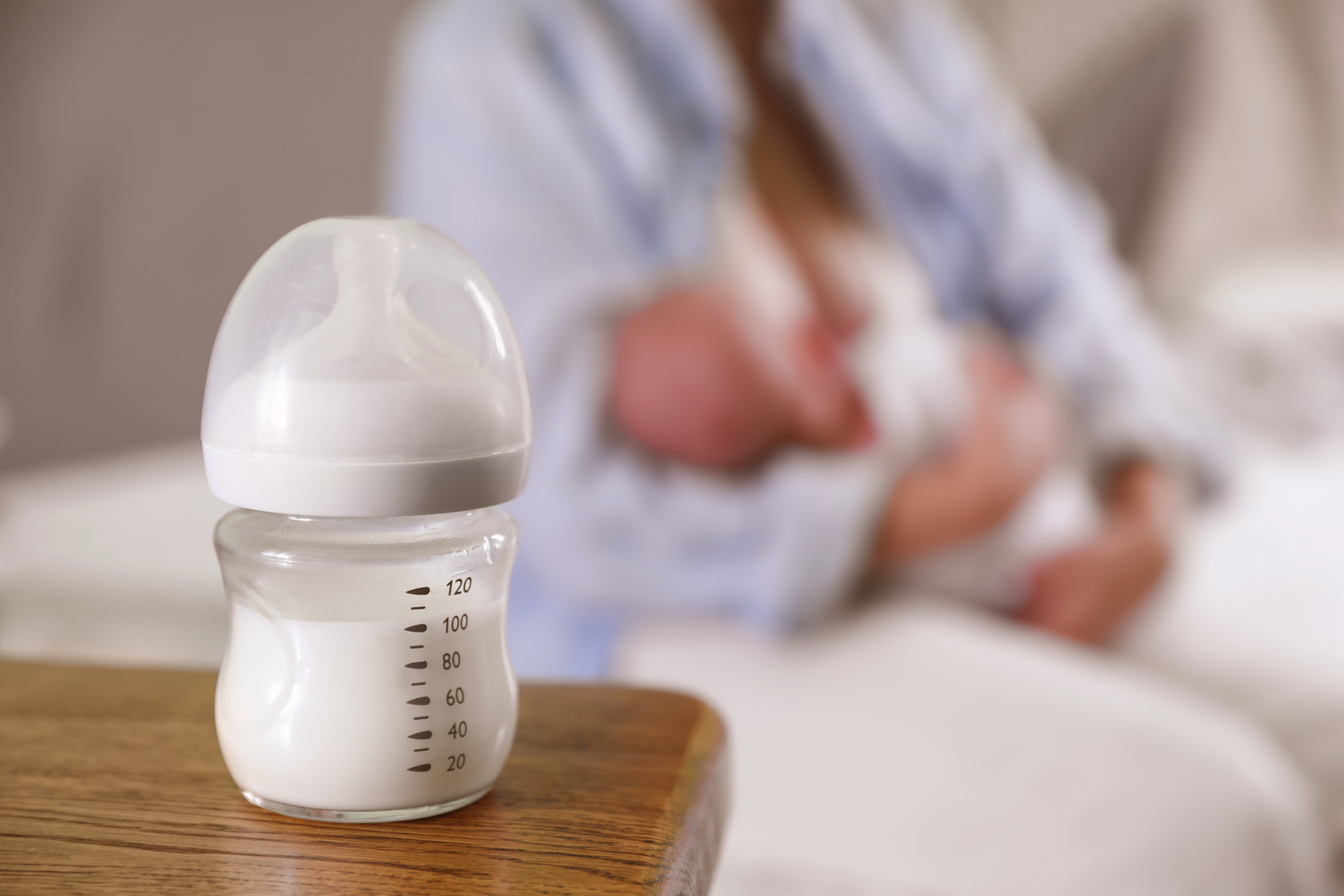
How often should you feed your newborn in the first week
Whether breastfed or bottle-fed, most newborns need 8–12 feeds every 24 hours in the first week.
Feeding on demand vs. timed intervals
Demand feeding means offering milk whenever your baby signals hunger rather than watching a clock. The World Health Organization (WHO) recommends breastfeeding on demand, as often as the child wants, day and night. The Centers for Disease Control and Prevention (CDC) notes that breastfed newborns may want to eat every 1 to 3 hours in the first days, and frequent feeding helps build milk supply. For formula, the CDC recommends every 2 to 3 hours.
A few practical pointers for how often to feed your newborn:
Offer a feed at the first hunger cue, before crying starts
Let your baby finish one breast before switching sides
Keep a dim, calm environment for nighttime feeds to help your baby resettle
When to wake your newborn to feed
You should wake your newborn if they sleep longer than 4–5 hours without eating during the first few weeks. The AAP recommends this to prevent missed feedings while the stomach is still very small. A gentle cheek stroke or loosened swaddle often rouses a sleepy baby enough to latch. Once birth weight is regained, your pediatrician can advise whether longer stretches are safe.
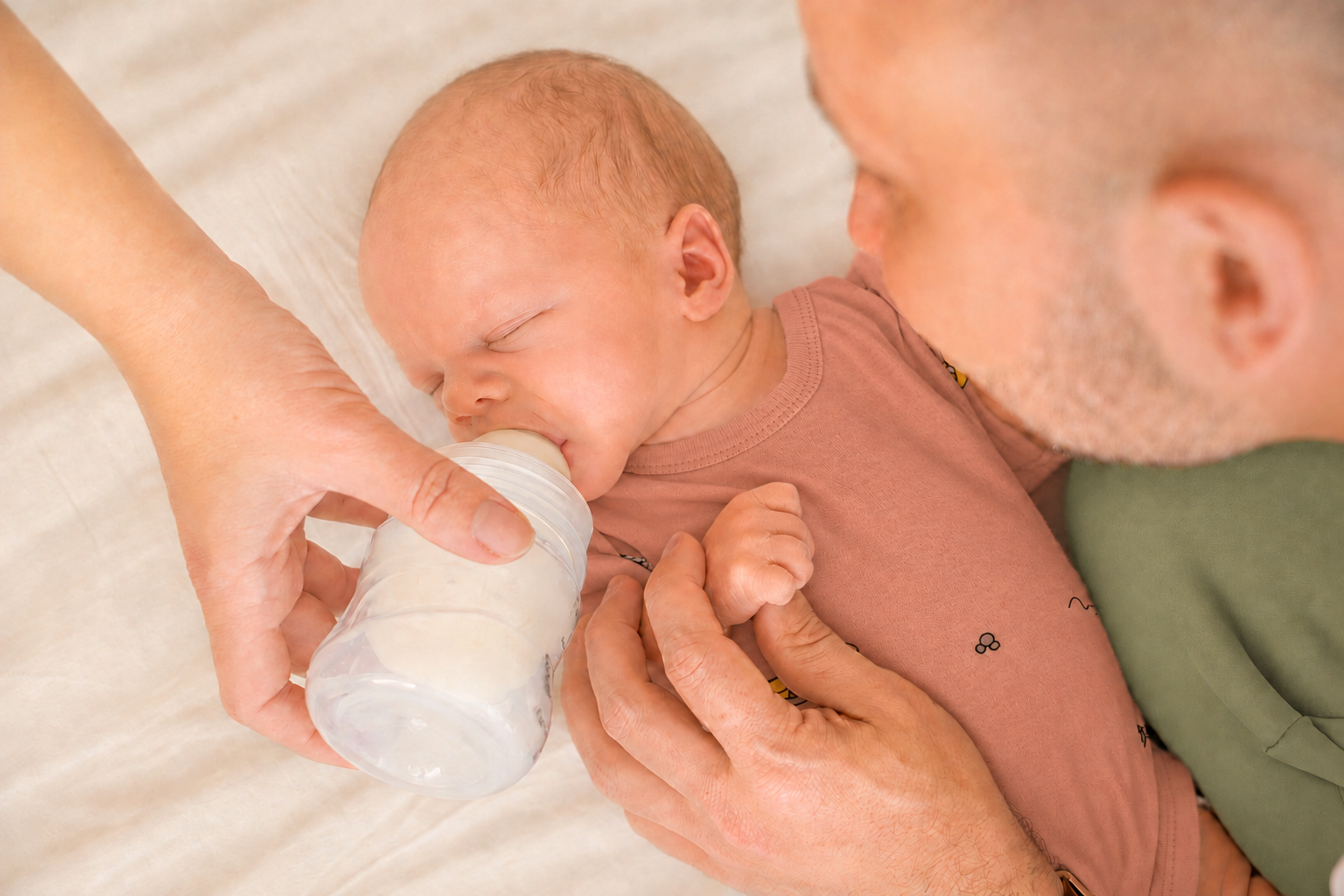
How much breast milk or formula should your newborn eat
Your newborn typically starts at about 5 mL of colostrum or 15 mL (0.5 oz) of formula per feeding on day 1, climbing toward 30–60 mL (1–2 oz) by the end of the first week.
How breastfeeding rhythm works
Breastfed newborns typically take about 1 oz per feeding within the first few weeks, slowly increasing from there, according to the AAP. Breast milk digests relatively quickly, which is why sessions tend to be more frequent than formula feeds. The NHS confirms that it is not possible to overfeed a breastfed baby, so following your baby's cues is the safest approach.
If you want to support production, our guide to increasing breast milk covers practical strategies.
Pacing formula feeds
In the first few days, formula-fed newborns generally take about 15 mL (0.5 oz) per feeding, rising to around 30–60 mL (1–2 oz) by mid-week. The CDC recommends offering 1 to 2 ounces of formula every 2 to 3 hours and giving more if your baby shows hunger signs. Knowing how much formula to feed your newborn comes down to starting small and reading cues:
Start small: offer the lower end of the range and top up only if hunger signals continue
Pace the bottle: hold it at a slight angle and pause when your baby slows down
Watch for fullness: turning away, relaxed hands, and slower sucking all mean "enough"
The AAP notes that overfed babies can experience stomach pains, gas, spit-up, or vomiting, so offering less upfront is the safer route.
Signs your newborn is getting enough milk
Wet diaper counts, weight trends, and behavioral cues together give you a reliable picture of your newborn's intake.
Diaper output day by day
Diaper output starts at 2–3 wet diapers per day in the first few days and climbs steadily from there. The AAP notes that after the first 4 to 5 days, a baby should have at least 5 to 6 wet diapers a day. By days 5–7, the AAP describes 6 or more wet diapers with pale, nearly colorless urine as a good sign. Your baby's first stools (meconium) are dark and sticky, gradually shifting to yellow as milk intake rises.
Weight changes to expect
A moderate weight dip of up to 8–10% of birth weight in the first few days is normal before your baby starts gaining again. The AAP notes that a well-nourished breastfed newborn should lose no more than this percentage before weight gain resumes. Your pediatrician will check weight at early visits, and our growth spurts guide explains how feeding patterns shift in the weeks ahead.
Hunger and fullness cues
Your baby communicates hunger through rooting, hand-to-mouth movements, and lip-smacking well before crying. The CDC identifies these early hunger cues:
Putting hands to mouth
Turning the head toward the breast or bottle (rooting)
Puckering, smacking, or licking lips
Clenched hands
Crying is a late hunger sign. Catching earlier signals usually means your baby latches more calmly and feeds more effectively.

First-week feeding mistakes and how to avoid them
Overfeeding a bottle-fed newborn and skipping overnight feeds are two of the most common first-week pitfalls. Watch for these patterns:
Pushing a full bottle past fullness cues, which can lead to gas and spit-up
Skipping night feeds, which risks low intake and, if breastfeeding, slower supply growth
Waiting for crying instead of catching early cues like rooting or lip-smacking
Starting with a smaller portion and feeding at the first cue helps you avoid all three. When feedings blur together at 3 a.m., Yuppo's AI parenting assistant Po can answer your newborn nutrition questions with age-specific guidance.
When to seek help: Contact your pediatrician if you notice fewer wet diapers than expected for your baby's age in days, weight loss exceeding about 10% of birth weight with no regain by around day 5, or persistent sleepiness that prevents feeding despite gentle waking.

Summary and Next Steps
Start small and build gradually: half an ounce of formula or a few milliliters of colostrum on day 1 matches your baby's stomach perfectly.
Feed on cues, not on the clock: rooting and hand-to-mouth movements are more reliable signals than a timer.
Track diapers daily: expect 2–3 wet diapers in the first couple of days, climbing steadily through the week.
Schedule an early weight check with your pediatrician to confirm that birth-weight regain is progressing.
Every baby's pace differs: slight variations in volume or frequency from one feed to the next are completely normal.
This content is for information only; always consult your pediatrician for diagnosis and treatment.
Keeping first-week feeding amounts straight when every night blends into the next is harder than any chart suggests. In Yuppo, you can enter your baby's birth date and follow expert-prepared developmental steps week by week, so feeding and growth expectations stay in context as your newborn changes.
Frequently Asked Questions
Yes, wake your baby every 2–3 hours at night until birth weight is regained, usually within the first couple of weeks. Frequent overnight feeds keep intake on track and, if you are breastfeeding, help signal your body to produce more milk during this critical supply-building window.
A day-1 stomach holds only a few milliliters, so just a teaspoonful of colostrum per feeding is expected and perfectly sufficient. Colostrum is concentrated enough to deliver essential nutrition and protective antibodies in tiny volumes, meeting your baby's needs until mature milk arrives around days 2–4.
Rooting, bringing hands to the mouth, and fussiness shortly after eating are common signs your baby wants more milk. If your baby relaxes, unclenches their hands, and turns away from the nipple, they are likely satisfied. A quick diaper count over 24 hours also helps confirm that overall intake is adequate.
Overfeeding is very unlikely with breastfeeding but can happen with bottle-feeding when a set amount is pushed past fullness cues. Watch for frequent spit-up, gassiness, and turning away from the nipple. Starting with a smaller portion and offering more only if hunger signals continue helps prevent discomfort.
Mature breast milk generally arrives around 2–4 days after birth, gradually replacing the thick golden colostrum. You may notice your breasts feeling noticeably fuller as this transition begins. Until the shift completes, colostrum provides all the nutrition and antibodies your newborn needs.